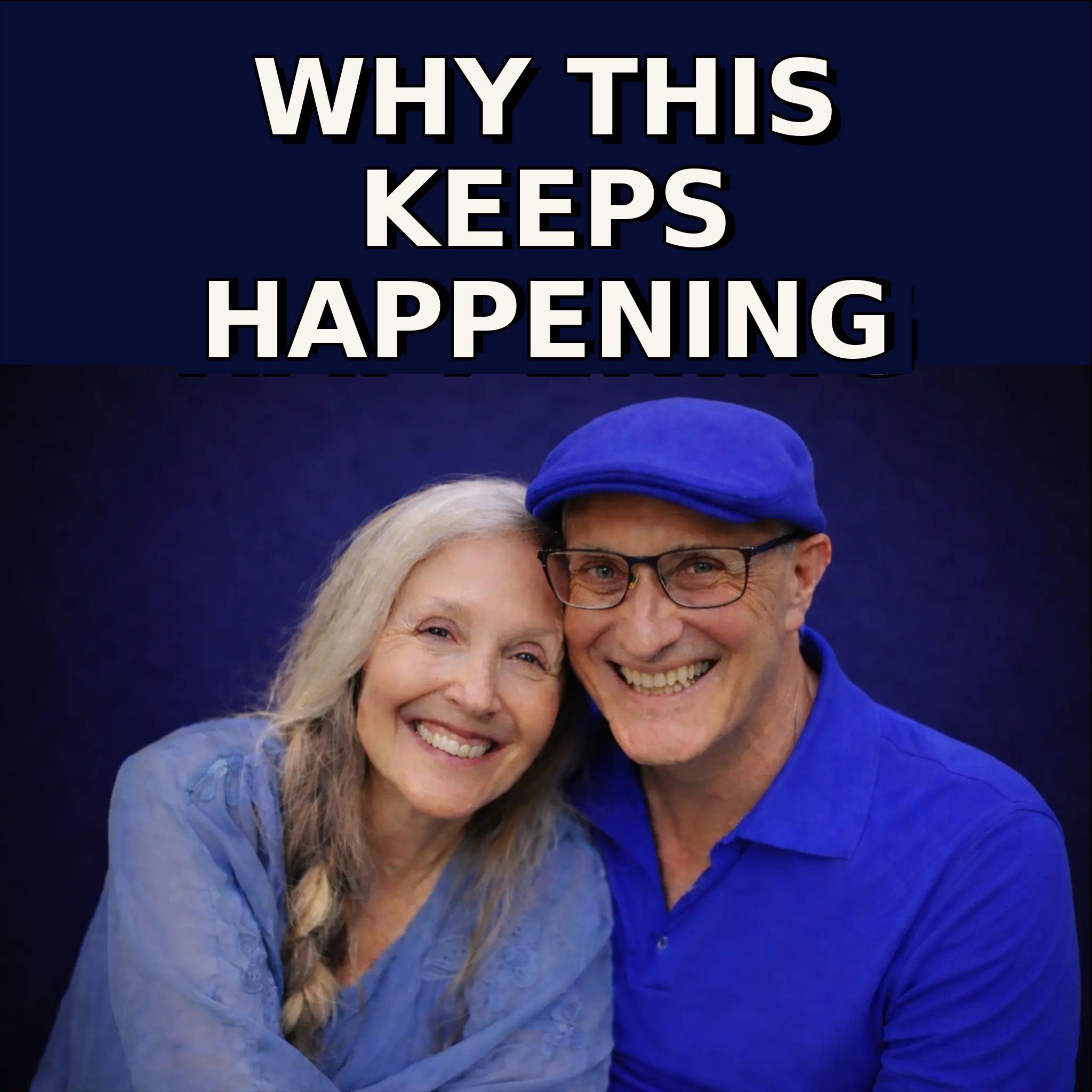
The Foundation of Freedom: Releasing the Ghosts of Our Parents
This podcast episode delves into the profound theme of "Releasing the Ghosts of Our Parents," emphasizing the pivotal distinction between forgiveness and release. We, Mark and Lynetta, engage in a raw and unfiltered conversation that emerged from an intense moment in our living room, wherein we uncovered critical insights about parental influence on our adult lives. The discussion reveals three substantial takeaways: the essential difference between forgiveness and release, the transformative power of parenting one's child as a means of self-reparenting, and the detrimental impact of seeking external approval on personal abundance. Through this exploration, we aim to illuminate how ingrained patterns can hinder our growth and how we can dismantle these barriers to foster genuine transformation. Join us as we navigate this intricate landscape of emotional healing and self-realization. The discussion embarked upon a profound exploration of the psychological underpinnings of personal trauma and the intricate relationship dynamics that often ensue as a consequence of it. The speakers, Mark and Lynetta, reveal the raw, unfiltered essence of their recent experiences, specifically a nocturnal confrontation with their own emotional turmoil, framed under the thematic title, "The Foundation of Freedom: Releasing the Ghosts of Our Parents." This conversation, distilled from an over two-hour dialogue, encapsulates three pivotal insights: the distinction between forgiveness and release, the transformative power of reparenting oneself through one's children, and the detrimental effects of seeking approval from external sources, which, they argue, stifles true abundance in life. Each insight serves as a beacon for listeners striving to break free from the shackles of past traumas and societal expectations, urging them towards a path of self-empowerment and authenticity. The episode commences with a vivid recounting of an intense moment of vulnerability experienced at 3:00 AM, a time often associated with heightened anxiety and introspection. In this charged atmosphere, the couple engages in a forensic analysis of their emotional states, revealing the stark contrast between Mark's spiraling anxiety and Lynetta's newfound spiritual awakening. This dichotomy sets the stage for a deep dive into the significance of emotional states and their impact on individual experiences and relationships. As they dissect their feelings of inadequacy and the haunting presence of parental expectations, they emphasize the necessity of moving beyond mere forgiveness—a concept laden with moral superiority—and towards a more liberating notion of release, which fosters genuine emotional freedom. In the latter segments, the dialogue shifts towards practical applications of these insights, particularly the importance of reparenting oneself through the act of parenting one’s own children. Mark and Lynetta illustrate this principle with personal anecdotes, showcasing how nurturing their child serves as a conduit for their own healing. By validating their child's emotions, they inadvertently provide the same validation to their inner selves, thereby dismantling generational cycles of emotional neglect. The episode culminates in a compelling discourse on the necessity of self-approval, positing that true transformation arises not from external validation but from an intrinsic sense of worthiness. This revelation, they assert, can alter the very fabric of one’s reality, allowing individuals to reclaim their power and pursue a life of genuine abundance.
Takeaways:
- The distinction between forgiveness and release is crucial for one's happiness and well-being.
- Parenting one's child serves as a powerful conduit for reparenting oneself effectively.
- Seeking external approval can severely inhibit one's personal abundance and fulfillment in life.
- Understanding that one is the architect of their own struggles fosters empowerment and self-awareness.
- Releasing the need for parental approval liberates individuals from the burdens of past expectations and trauma.
- The process of genuine creation arises when one shifts from seeking external validation to embracing self-approval.
Links referenced in this episode:
Transcript
Welcome to why this Keeps Happening.
Speaker A:From Trauma to Transformation, the podcast that helps you break free from repeating patterns and create the life you want through our five stage process.
Speaker A:We're Mark and Lynetta.
Speaker B:Before we begin, we want you to know that this episode is based on a discussion between Mark and Lynetta that was over two hours long.
Speaker B:We've condensed it down to the key insights and breakthroughs and used AI to vocalize.
Speaker A:So.
Speaker A:So today we're doing a deep dive into something a little different than usual.
Speaker B:Yeah, much different.
Speaker A:Normally we come to this with a very polished idea, something we've marinated in for a few weeks.
Speaker B:Right, Organized thoughts.
Speaker A:Exactly.
Speaker A:But this deep dive is fresh.
Speaker A:It's really raw.
Speaker A:It's essentially a forensic analysis of a breakdown that happened, well, right.
Speaker B:In real time in our own living room.
Speaker A:Yeah.
Speaker A:The title of this deep dive is the foundation of Freedom Releasing the Ghosts of Our Parents.
Speaker B:And we have three massive takeaways that we're going to hit today.
Speaker A:Number one being the difference between forgiveness and release.
Speaker B:Yes.
Speaker B:And why that distinction is honestly a life or death matter for your own happiness.
Speaker A:Right.
Speaker A:And second, we'll explore how parenting your child is secretly the most powerful way to reparent yourself.
Speaker B:And third, we are going to unpack why waiting for approval stops abundance dead in its tracks.
Speaker A:Whether that approval is from your parents or just from the world in general.
Speaker B:Exactly.
Speaker B:So let's set the scene for you all listening, because the context here really matters.
Speaker A:It really does.
Speaker B:This wasn't a boardroom meeting or a therapy office.
Speaker A:It was 3.0am the dreaded 3.0am Wake up.
Speaker B:The house was completely quiet.
Speaker B:The world was asleep.
Speaker B:But inside our living room, the energy was.
Speaker B:Well, volatile is probably the polite word for it.
Speaker A:Yeah, volatile is generous.
Speaker A:I mean, I was spiraling hard.
Speaker B:You really were.
Speaker A:You know, that specific flavor of 3:00am anxiety where.
Speaker A:Where every single shadow looks like a monster.
Speaker B:Oh, yeah.
Speaker A:And every unpaid bill looks like an actual prison sentence.
Speaker B:That was me just completely tense.
Speaker A:Physically tense.
Speaker A:I was sitting there, obsessing over business sales, just staring at the ceiling, totally trapped in what we call the money paradigm.
Speaker B:And meanwhile, I was in a completely
Speaker A:different universe, literally across the couch, but in a different galaxy.
Speaker B:Right.
Speaker B:I had just come through a pretty bad bout of illness, so physically, my body was recovering, but my spirit was.
Speaker B:It was electric.
Speaker A:You were buzzing.
Speaker B:I was.
Speaker B:I had just finished reading the final chapter of my new book, and I had this massive spiritual breakthrough.
Speaker A:So you're vibrating at the frequency of true creation.
Speaker B:And you were vibrating at the frequency of sheer survival.
Speaker A:It was a head on collision of states.
Speaker B:It really was.
Speaker B:And usually a dynamic like that ends with an argument or, you know, someone just sleeping on the couch.
Speaker A:Absolutely.
Speaker A:But instead we ended up having this two hour conversation that honestly, it dismantled everything I thought I knew about why I was stressed.
Speaker B:Let's dive deeper into where your head was at.
Speaker B:You mentioned a dream you had right before you woke up.
Speaker A:Yeah.
Speaker A:And I'm not usually a let me tell you about my dream kind of guy.
Speaker B:You usually hate that because it can
Speaker A:be so boring for other people.
Speaker A:But this one was.
Speaker A:It was visceral.
Speaker A:It stuck to me like tar.
Speaker B:What was happening in it?
Speaker A:It was wartime.
Speaker A:I wasn't on the front lines with a gun or anything, but I was with this group of civilians.
Speaker B:Okay.
Speaker A:And there was this overwhelming, just crushing sense of doom rolling toward us, like the enemy war machine was coming.
Speaker B:And what was the solution in the dream, how were you fighting back?
Speaker A:That's the disturbing part.
Speaker B:Yeah.
Speaker A:The group brought out these metal weapons.
Speaker A:Wheel hubs, like car parts, like heavy rusted industrial parts, and long metal strips.
Speaker A:And the understanding, the logic of the dream was that we had to strap these heavy metal things to our bodies.
Speaker B:And do what?
Speaker A:And throw ourselves into the actual gears of the war machine.
Speaker B:Oh, my gosh.
Speaker A:Yeah.
Speaker A:We had to sacrifice our physical bodies to slow it down just enough for, I don't know, for something else to survive.
Speaker B:That is just such a violent, heavy image.
Speaker A:It was terrifying.
Speaker A:But honestly, the scariest part wasn't the violence itself.
Speaker A:It was my own thought process.
Speaker A:In the dream, what were you thinking?
Speaker A:I remember distinctly thinking, I'd be willing to do it.
Speaker A:I will die to stop the machine.
Speaker A:But then I thought, is that the best I can do is my only value my own destruction?
Speaker B:Wow.
Speaker B:And you woke up with that sitting heavy right on your chest.
Speaker A:Woke up totally sweating.
Speaker A:And I realized immediately this isn't just a dream about some fictional war.
Speaker A:This is exactly how I feel about our finances right now.
Speaker B:The money paradigm.
Speaker A:Exactly.
Speaker A:I felt like I had to grind myself into dust, sacrifice my peace, my sleep, my actual body, just to keep the wolf from the door.
Speaker B:It's that core belief that survival literally requires self destruction.
Speaker A:Yes.
Speaker A:And it manifested in this really ugly way that night regarding a book sale.
Speaker B:Oh, right, the notification.
Speaker A:Yeah.
Speaker A:My phone lit up with a notification that Chloe, who used to be Carrie and our group had bought a copy of your new book.
Speaker B:Which normally is amazing news, Right?
Speaker A:Normally that's a cause for huge celebration.
Speaker B:Yeah.
Speaker A:Chloe's gonna get this Great content and have her own breakthroughs.
Speaker B:Connection.
Speaker B:Gross.
Speaker B:The whole reason we do this.
Speaker A:But that is not what I felt at all.
Speaker B:What did you feel?
Speaker A:I just felt this sick wave of desperate relief.
Speaker A:I looked at the screen and thought, thank God, cash.
Speaker B:Purely transactional.
Speaker A:It was so transactional, it felt gross.
Speaker A:Honestly, I looked at that sale not as a human interaction, but as a.
Speaker A:Like a hit of dopamine to calm my fear.
Speaker B:You were using the transaction to regulate yourself.
Speaker A:I was using Chloe to medicate my own anxiety.
Speaker B:That's a really hard admission to make.
Speaker A:It is.
Speaker A:I felt ashamed.
Speaker A:I think a lot of people listening to us, especially entrepreneurs, you know exactly that feeling?
Speaker B:Oh, definitely.
Speaker A:When you're in the money paradigm, you aren't creating value for people.
Speaker A:You are just hunting for safety.
Speaker B:You're hunting for a number.
Speaker A:Right.
Speaker A:I was just waiting for the bank account to hit a certain threshold so I could finally get.
Speaker A:Finally give myself permission to just breathe.
Speaker B:And that right there is the trap that is the ultimate misalignment.
Speaker A:How so?
Speaker B:Because you are waiting for the external world, the money, the sale, the metrics to dictate your internal state.
Speaker A:Yeah, it was.
Speaker B:You were essentially saying to the universe, I will feel safe when the world proves that I am safe.
Speaker A:Which, to a stressed mind, sounds completely logical.
Speaker B:Right.
Speaker B:Because that's what society teaches us.
Speaker A:The world tells you, get the money, then you can relax, or build the house, then you're secure.
Speaker A:But you really challenged me on this
Speaker B:at 3am because it's completely backwards.
Speaker B:It's like applying Newtonian physics to a quantum problem.
Speaker A:Explain that for the listener.
Speaker B:If you wait for the evidence to feel the feeling, you are waiting for a bus that has already left the station.
Speaker A:It's already gone.
Speaker B:Exactly.
Speaker B:True creation, the kind of creation that actually sifts your reality, isn't about reaction, it's about generation.
Speaker A:And this is where you brought up the rain dance.
Speaker B:Yes.
Speaker A:And I have to be completely honest with you and the audience.
Speaker A:At 3am my skepticism meter was off the charts.
Speaker B:I could see it on your face.
Speaker A:I was literally thinking, lynetta, I have actual bills to pay.
Speaker A:I don't need a metaphor right now.
Speaker A:I need a deposit.
Speaker B:I know you did, but think about the indigenous rain dance concept.
Speaker B:In our modern super skeptical view, we think they are dancing for rain.
Speaker A:Right, like partitioning the sky.
Speaker B:Exactly.
Speaker B:We picture them looking up at this scorching blue sky, begging the clouds to appear.
Speaker B:Please, please give us water.
Speaker A:A transaction.
Speaker A:I dance, you give water.
Speaker B:Right, but that's not how it works in the context of true creation.
Speaker B:The elder who dances isn't dancing for rain.
Speaker A:What's he doing then?
Speaker B:He is dancing in the rain.
Speaker A:But there is no rain.
Speaker A:It's totally dry.
Speaker B:Externally, yes, the dirt is dry.
Speaker B:But internally, inside his nervous system, he is hallucinating the rain.
Speaker A:He's making it real inside First, Yes.
Speaker B:He closes his eyes and he actually feels the wet mud squishing between his toes.
Speaker B:He smells that distinct ozone smell of a coming storm.
Speaker A:He feels the cold droplets hitting his hot skin.
Speaker B:He generates the biological reality of rain is here so intensely that his own body believes it.
Speaker A:So he's basically hacking his own nervous system?
Speaker B:In a way, yes.
Speaker B:He is broadcasting a frequency of hair have not a frequency of want.
Speaker A:Okay, that hits hard.
Speaker B:Think about it.
Speaker B:When you are stressed about money, you are broadcasting a frequency of lack.
Speaker A:I'm screaming at the universe, I don't have enough.
Speaker B:Exactly.
Speaker B:And the universe, which is basically just a giant mirror, looks at you and says, you're right, you don't.
Speaker B:Here is more evidence of you not having enough.
Speaker A:That is honestly, infuriatingly accurate.
Speaker A:Yeah, because the more I stress that night, the harder everything seemed to get.
Speaker B:Because you were generating the reality of lack of the rain.
Speaker B:Dancer creates the state of the wish fulfilled.
Speaker A:He feels the relief.
Speaker B:He feels the abundance, the wetness before a single cloud appears in the sky.
Speaker B:And because he vibrates at the frequency of the solution, the solution is magnetically drawn to him.
Speaker A:It's the difference between hoping and knowing.
Speaker B:Perfectly said.
Speaker A:Hoping always implies doubt.
Speaker A:I hope it rains.
Speaker A:Means it might not.
Speaker A:But knowing is a concrete state of being.
Speaker B:Precisely.
Speaker B:You were hoping for sales to make you feel safe.
Speaker B:I was telling you to feel safe, to feel abundant, to feel taken care of right now, sitting in the dry dirt of our living room.
Speaker A:Because that feeling is the actual seed that grows the rain.
Speaker B:Yes.
Speaker A:It's a radical shift in thinking.
Speaker A:And it connects directly to what we talk about all the time, which is SoulView.
Speaker B:Let's define SoulView for the listener, just in case they're new to the concept.
Speaker A:Good idea.
Speaker B:SoulView is the practice of zooming out way, way out.
Speaker B:It is moving from the perspective of the ego, which is the part of you that just wants comfort and immediate safety.
Speaker A:And it moves it to the perspective of the soul.
Speaker B:Right.
Speaker B:And the soul wants growth.
Speaker B:It wants evolution.
Speaker A:So from my ego's view, at 3am My financial stress was just a total disaster.
Speaker A:It was bad luck or proof that I was a failure.
Speaker B:But from the soul view, that stress was a curriculum.
Speaker A:That's the reframe right there.
Speaker A:From a soul view.
Speaker A:I didn't just fall into financial stress by accident.
Speaker A:I actually designed it.
Speaker B:Your soul set up this exact obstacle course specifically to force you to face this one lesson.
Speaker A:I created a situation where working harder simply wouldn't work anymore.
Speaker B:Right.
Speaker B:You exhausted that strategy so I would
Speaker A:be forced, absolutely forced, to learn how to create from the inside out.
Speaker B:You completely cornered yourself.
Speaker A:I did.
Speaker A:I backed myself into a tight corner where the only way out was up.
Speaker A:And realizing that I am the architect of my own struggle was strangely empowering.
Speaker B:Why empowering?
Speaker A:Because if I created the mess to learn the lesson, then learning the lesson is the key to dissolving the mess.
Speaker A:I'm in control.
Speaker B:But here is the rub.
Speaker B:You understood this intellectually at 3am you are a smart guy.
Speaker B:You get the concepts, right?
Speaker B:But you couldn't do it.
Speaker A:No, I couldn't.
Speaker A:I was sitting there saying to myself, okay, feel the rain.
Speaker A:Feel the rain.
Speaker A:And my stress was just screaming, we are dying.
Speaker B:Your body was in total lockdown.
Speaker A:My physical body was completely locked.
Speaker B:Now here's where it gets interesting.
Speaker B:This is segment two, the body breath connection.
Speaker A:This was the absolute turning point of
Speaker B:the night for me because we had to leave the realm of philosophy.
Speaker B:You can't just think your way out of a nervous system lockdown.
Speaker A:I told you.
Speaker A:I said I can't just mindset my way out of this.
Speaker A:My lower back was aching.
Speaker A:My gut was so tight, I literally felt like I had swallowed a fist.
Speaker B:And you said something else that really broke my heart, but it was just so incredibly honest.
Speaker B:What was it you said?
Speaker B:I don't know how to feel good.
Speaker B:I only know how to feel pain or neutral.
Speaker A:Yeah, that was a bleak realization.
Speaker B:It's so common, though.
Speaker A:If I'm not in an act of crisis, I think I'm happy, but I'm not actually happy.
Speaker A:I'm just numb.
Speaker B:Right.
Speaker A:I realized I didn't have a somatic reference point in my body for safety or joy.
Speaker B:So we used SRI Somatorespiratory Integr.
Speaker B:Let's explain that for those listening who haven't experienced this.
Speaker B:It is a technique developed by Dr. Donald Epstein.
Speaker B:It's about using breath, using touch and focused attention to bridge the disconnected parts of your own body.
Speaker A:And you just guided me right through it, right there on the couch.
Speaker B:We had to find a resource first.
Speaker A:Yeah.
Speaker B:Step one.
Speaker B:I asked you, where in your body or under what conditions do you actually feel safe?
Speaker B:Where do you feel good?
Speaker A:And I really struggled to find it at first.
Speaker B:You did.
Speaker A:But Then I realized it's touch.
Speaker A:When someone rubs my head or scratches my back or when I'm getting a
Speaker B:massage, that sensation is a clear yes from your body.
Speaker A:It isn't just not pain.
Speaker A:It is ecstatic.
Speaker A:It's a deep feeling of being held, of being loved and safe.
Speaker B:So that became our anchor.
Speaker B:Step one is finding the yes, finding the place that feels good, which was the sensation on your back.
Speaker B:And step two is to acknowledge the no.
Speaker B:The tension, the pain, the swallowed fist
Speaker A:in my gut, the fear.
Speaker B:Exactly.
Speaker B:And step three is the bridge.
Speaker A:This is the magic part.
Speaker B:It is.
Speaker B:Most people try to use the good feeling to just wipe out the bad feeling.
Speaker B:They try to numb the pain or run from it.
Speaker A:Right.
Speaker A:Distract themselves.
Speaker B:But SRI is about integration.
Speaker B:You breathe into the good space.
Speaker B:You really feel that safety on your back.
Speaker B:And then you drag that breath, you drag that sensation right, right into the tight space in your gut.
Speaker A:And it feels so weird at first
Speaker B:because your brain resists it totally.
Speaker A:You are making the sound, the specific breath sound, and you were trying to connect these two wildly different zones in your body.
Speaker A:My brain was saying, the gut is dangerous, stay away from there.
Speaker B:But you kept breathing anyway.
Speaker B:You bridged the safety of the back into the absolute terror of the belly.
Speaker B:And what happened?
Speaker A:It was wild.
Speaker A:The knot in my gut didn't just disappear, it melted.
Speaker A:It was like introducing a really scared child to a big, protective dog.
Speaker A:At first the child is terrified, but then the dog just lies down calmly, and the child realizes, oh, I am protected.
Speaker B:That is a beautiful way to describe it.
Speaker A:The safety from my back literally wrapped around the fear in my gut.
Speaker B:That is what we call entrainment.
Speaker B:The higher frequency, which was the safety entrain at the lower frequency of the fear.
Speaker A:I didn't get rid of the fear.
Speaker B:No, you didn't banish it.
Speaker B:You loved it into submission.
Speaker B:You integrated it.
Speaker A:And suddenly the whole money paradigm just lost its grip on me because my body finally felt safe.
Speaker A:And if my body feels safe, I don't need the bank account to prove that I'm safe.
Speaker B:You accessed the rain dance state.
Speaker B:You felt the rain before the money arrived.
Speaker A:It made me realize that my two dominant states of flow are when I'm helping people, this intense outward focus, and when I'm being touched, this intense receiving.
Speaker B:Right.
Speaker A:I need to learn how to generate that being touched feeling from the inside.
Speaker A:So I'm not constantly dependent on you or a massage therapist to regulate my own nervous system.
Speaker B:And that self regulation is the gateway to the next massive topic.
Speaker B:We covered that night because Once the
Speaker A:body is calm, the mind can actually work.
Speaker B:Exactly.
Speaker B:Once your body was offline as a threat, we started talking about why these patterns even exist in the first place.
Speaker A:This is a crucial moment.
Speaker A:Segment three, Reparenting through creation.
Speaker B:Because we realize it all goes back to the ghosts of our parents.
Speaker A:It always does, doesn't it?
Speaker B:Always.
Speaker B:And this connects directly to the book I had just finished writing that night.
Speaker A:Tell them about the book.
Speaker B:Well, the book is ostensibly about parenting children.
Speaker B:It's written as a guide for parents.
Speaker B:But as I was writing it, and especially when I finished that final chapter, I had this absolute thunderbolt of a realization.
Speaker A:What was it?
Speaker B:I realized I wasn't just writing this book for my son, Alex.
Speaker A:Right.
Speaker B:I was writing it to parent myself.
Speaker A:I want to really unpack that.
Speaker A:Because reparenting is one of those buzzwords that gets thrown around constantly on Instagram or TikTok.
Speaker B:I want to really unpack that.
Speaker B:You're reparenting your inner child.
Speaker A:Exactly.
Speaker B:Yeah.
Speaker A:But you are talking about something much more structural than buying a treat.
Speaker B:Much deeper.
Speaker B:It is about the nervous system.
Speaker B:Again, look.
Speaker B:Alex has this intensity.
Speaker B:He has what I call a volcano of rage.
Speaker B:He does when he gets mad.
Speaker B:It is blinding.
Speaker B:It is pure fire.
Speaker A:Which historically, is a huge trigger for you.
Speaker B:A massive trigger.
Speaker B:Because when I was a child, my rage was not welcome.
Speaker B:My intensity was always considered too much.
Speaker A:You had to hide it.
Speaker B:I had to suppress it.
Speaker B:So when I saw that same fire in him, my default programmed reaction was fear.
Speaker B:My brain said, shut it down.
Speaker B:Fix it, hide it.
Speaker B:Run away from it.
Speaker A:Because that is exactly what happened to you when you were little.
Speaker B:Exactly.
Speaker B:But with this book, and with my absolute commitment to breaking this generational cycle, I decided to do the exact opposite.
Speaker A:What did you do?
Speaker B:When Alex exploded, I didn't run.
Speaker B:I became the rock.
Speaker A:You just stayed.
Speaker B:I just sat there.
Speaker B:I held the space for him.
Speaker B:I said, I hear you.
Speaker B:You are completely allowed to be angry right now, and I am not leaving.
Speaker A:You validated the volcano.
Speaker B:I validated the volcano.
Speaker B:And here is the miracle of that moment.
Speaker A:Yeah.
Speaker B:As I was looking at my son and giving him the exact acceptance that I never got as a child, I felt it being given to me.
Speaker A:Wow.
Speaker A:Just by giving it to him.
Speaker B:Yes.
Speaker B:They say you cannot give what you do not have, but conversely, you cannot give what you do not experience.
Speaker A:Explain that.
Speaker B:As the love and the validation flowed through me to get to him, it had to saturate my own inner child first.
Speaker A:That is incredible.
Speaker B:By figuring out how to be the mother I always Wanted for him.
Speaker B:I actually became the mother I always wanted for myself.
Speaker A:That is just profound.
Speaker A:You effectively bypass the need for your own mother to do it for you.
Speaker B:Yes.
Speaker B:And that is where the freedom is.
Speaker B:I spent 40 years of my life waiting for my mother to change, waiting
Speaker A:for her to soften up, waiting for
Speaker B:her to finally say, I see you, Lynetta.
Speaker B:I am so sorry I couldn't handle your fire when you were little.
Speaker A:And waiting for that apology from a parent is just a form of prison.
Speaker B:It is the ultimate waiting room of life.
Speaker B:Think about our client, Mary.
Speaker A:Mary is the perfect example of this.
Speaker B:She is literally terrorized by her past.
Speaker B:She is paralyzed in her current life because she is still waiting for her parents to acknowledge the harm they did to her.
Speaker A:Right.
Speaker A:She feels like she cannot move a single step forward until they look at her and say, we were wrong.
Speaker B:She is handing them the keys to her own handcuffs.
Speaker A:That's exactly what it is.
Speaker B:And what I realized writing the book is that I do not need my mother to say it anymore because I said it.
Speaker B:I became the source of that safety for myself.
Speaker A:But there is a real grief in that realization, isn't there?
Speaker A:You talked that night about the fantasy mother.
Speaker B:Oh, the grief was so heavy.
Speaker B:That was what the last chapter of the book was about.
Speaker B:I had to write a eulogy, essentially.
Speaker A:A eulogy for who?
Speaker B:Not for my actual mother.
Speaker B:She's still alive.
Speaker B:But a eulogy for the fantasy mother, the ideal version, and the mother I dreamed of having.
Speaker B:The mother who would bake cookies and listen to my problems and deeply understand my soul.
Speaker A:We all have that fantasy.
Speaker A:We all have that perfect parent in our heads who fixes everything and makes it all okay.
Speaker B:And I had to finally accept that my real human mother is not that person.
Speaker B:She never was and she never will be.
Speaker A:She's just a person.
Speaker B:She is a human being with her own unhealed trauma and her own limitations.
Speaker B:And holding onto the fantasy of who she should be was actually preventing me from seeing her as she truly is.
Speaker A:It was preventing you from being free.
Speaker B:I sobbed writing that chapter.
Speaker B:It was a funeral.
Speaker B:Yeah, but on the other side of that funeral was this incredible lightness.
Speaker B:Because once the fantasy is dead, you stop trying to force your real parent to act like the fantasy.
Speaker A:You stop auditioning them for a role they are literally incapable of playing.
Speaker B:Exactly.
Speaker A:And this brings us to a distinction that I think is going to be the most challenging for our listeners today.
Speaker A:Yeah, but it's also the most liberating.
Speaker B:Yes.
Speaker B:Segment four.
Speaker B:Forgiveness versus release.
Speaker A:This is where we get a little controversial.
Speaker B:I know people have strong feelings about this.
Speaker A:I noticed when I read your book, you never use the word forgiveness.
Speaker A:Not once.
Speaker A:And we talked about this at 3am why avoid that word?
Speaker B:Because forgiveness, as it is traditionally taught in our culture, is very often a trap.
Speaker A:A trap?
Speaker B:It keeps the hierarchy in place.
Speaker B:Think about the energy of it.
Speaker B:I forgive you.
Speaker B:It inherently implies I am, up here, morally superior.
Speaker B:You are down there, the sinner.
Speaker A:You owe me a debt.
Speaker B:You owe me a debt.
Speaker B:But I, in my infinite benevolence, am choosing to cancel it.
Speaker A:It keeps the ledger open between you two.
Speaker B:It does.
Speaker A:It keeps the connection to the wound completely alive.
Speaker A:Saying, I forgive you for hurting me just reaffirms that I am hurt and you are the hurter.
Speaker B:Exactly.
Speaker B:It's sticky.
Speaker B:It keeps you attached.
Speaker B:But release.
Speaker B:Release is completely different.
Speaker A:How so?
Speaker B:Release isn't about the debt at all.
Speaker B:It's about the relationship itself.
Speaker A:Let's use the tennis analogy we came up with.
Speaker A:I love that one.
Speaker B:Okay.
Speaker B:Imagine you are playing a tennis match with your parent.
Speaker A:Okay?
Speaker B:And it is a grueling, miserable match.
Speaker B:They are serving toxic balls at you.
Speaker B:Criticism, guilt, silent treatment, manipulation.
Speaker A:And what am I doing?
Speaker B:You are running all over the court, sweating, exhausted, just hitting the balls back.
Speaker B:You are trying to hit the perfect
Speaker A:shot, trying to win the game.
Speaker B:You are trying to get them to finally drop their racket and shout, great point.
Speaker B:You win.
Speaker B:I love you and approve of you.
Speaker A:So where does forgiveness fit in this analogy?
Speaker B:Forgiveness is standing at the net, bleeding and exhausted and shouting, I forgive you for hitting that ball at my face.
Speaker A:But I'm still on the court.
Speaker B:You are still standing on the court.
Speaker B:You are still gripping the racket.
Speaker B:You are still actively participating in the game.
Speaker A:Wow.
Speaker A:And release.
Speaker B:Release is putting the racket down on the ground.
Speaker B:It is walking off the court.
Speaker B:It is leaving the stadium entirely.
Speaker A:And what happens to the parent in that scenario?
Speaker B:They can keep serving balls if they want to.
Speaker B:They can scream at the empty court all day long, but the game is over for you.
Speaker A:There is no one there to receive the toxicity.
Speaker B:Right.
Speaker B:You aren't trying to change them anymore.
Speaker B:You aren't trying to win.
Speaker B:You aren't even trying to lose.
Speaker B:You are just done.
Speaker A:You are fired from the job of being my source of approval.
Speaker B:That is exactly it.
Speaker B:You strip them of the title.
Speaker B:They are just regular people now.
Speaker A:This reminds me of Paul.
Speaker B:Yes.
Speaker B:Our client.
Speaker B:Paul struggles with this so much, he
Speaker A:thinks if he stops fighting with his dad, he's somehow letting him off the hook.
Speaker B:But really?
Speaker B:Paul is the one hanging on the hook.
Speaker A:Man, that hit me so hard that night because when you explained the tennis match, I realized I am still playing tennis with my dad.
Speaker B:You are.
Speaker A:And my dad isn't even really playing anymore.
Speaker A:He's older, he's mellowed out a lot.
Speaker A:But I am out there playing against a ghost.
Speaker B:You had a very specific memory come up about this.
Speaker B:About riding a bike.
Speaker A:Yeah.
Speaker A:We were trying to locate this feeling, this charcoal briquette of rage I feel in my gut sometimes when I think about approval.
Speaker B:Right.
Speaker A:And I flashback to being a kid learning to ride a bike for the first time.
Speaker A:You know, that feeling, the wind, the speed, the wobble of the handlebars as pure freedom.
Speaker A:It should be about the freedom.
Speaker A:It should be entirely about the skill.
Speaker A:Look at me.
Speaker A:I can ride.
Speaker B:But it wasn't.
Speaker A:No.
Speaker A:In my memory, the joy wasn't the riding itself.
Speaker A:The joy was totally contingent on riding past my dad and having him see me do it.
Speaker B:You needed the witness to make it real.
Speaker A:I desperately needed the applause.
Speaker A:Look at me.
Speaker A:Look at me.
Speaker A:And if he didn't look, or if he just gave a little nod instead of cheering, the bike ride suddenly meant absolutely nothing.
Speaker B:It erased the joy.
Speaker A:It did.
Speaker A:I realized I value the praise for the skill more than the skill itself.
Speaker B:And that is the tragedy of it, Mark, because look at you now.
Speaker B:You are a grown man.
Speaker B:You are running a success business, you are writing books.
Speaker A:I'm riding the biggest bike of my life.
Speaker B:Exactly.
Speaker B:But you are still circling the driveway, looking over your shoulder for dad to give you a thumbs up.
Speaker A:And because he's not giving it, or at least not giving it in the specific, grandiose way my ego craves, I feel like a failure.
Speaker A:I feel fundamentally unsafe.
Speaker B:And here's where it gets genuinely dangerous for you and for anyone listening who does this.
Speaker B:Because you cannot force your dad to give that specific approval.
Speaker A:No, I can't.
Speaker B:So what do you do instead?
Speaker B:You hire understaff.
Speaker A:Oh, man.
Speaker A:Segment five, the stand ins.
Speaker A:This is the part that perfectly explains my business anxiety.
Speaker B:It explains everything about the 3am panic.
Speaker A:I realized that because I can't get that God tier approval from my actual father, I have just projected his face onto the entire world.
Speaker B:You've hired everyone.
Speaker A:I have hired everyone I meet to be a stand in for my dad.
Speaker B:Who specifically give examples, literally everyone.
Speaker A:Clients, the marketplace as a whole, social media followers, even political figures.
Speaker B:So when you look at a client
Speaker A:subconsciously, I am not thinking, can we do business together?
Speaker A:Can I provide value to You.
Speaker A:I am actually thinking, will you be my dad?
Speaker A:Will you tell me I am good?
Speaker A:Will you validate my entire existence by giving me your money?
Speaker B:That is a massive, crushing burden to place on a client who just wanted to buy a service.
Speaker A:It is entirely unfair to them and it is absolute suicide for my nervous system.
Speaker B:Because if they say no, if the
Speaker A:client says no, which is just a normal business decision, I don't hear no, thank you.
Speaker A:I hear, dad doesn't love you, you are unworthy of life.
Speaker A:And then I crash.
Speaker B:This is what we called the ransom note concept, right?
Speaker A:I realized I'm not actually selling a book or a service.
Speaker A:I am handing people a ransom note that says, please buy this so I can feel like I deserve to live today.
Speaker B:And people feel that energy, even if they don't know what it is.
Speaker B:They feel it.
Speaker B:It is repellent.
Speaker A:It's desperate.
Speaker B:Nobody wants to be responsible for your self worth.
Speaker B:They just want to read a good book or get some help.
Speaker B:When you attach your literal survival to a simple sale, you make the sale heavy.
Speaker B:You make it sticky.
Speaker A:And you pointed out that I do this with authority figures too.
Speaker B:You do.
Speaker B:You have this fascination and repulsion thing with powerful men in the media.
Speaker A:Yeah.
Speaker B:Whether it's political figures like Trump or billionaires like Elon Musk or some self help guru, you project this ultimate father archetype right onto them.
Speaker A:It's so true.
Speaker B:You are either desperately seeking their favor by agreeing with them or you are rebelling against them like a moody teenager.
Speaker A:Look at me, I'm defying you.
Speaker A:It's just, it's all the same game.
Speaker A:It's all tennis.
Speaker B:It is all tennis.
Speaker B:And you are exhausted.
Speaker A:I am so exhausted.
Speaker A:So the big question for the listener, how do we stop?
Speaker A:How do we actually release this?
Speaker A:Because we can't just logically decide to stop doing it.
Speaker A:The pattern is hardwired into our nervous system.
Speaker B:It requires a total reconstruction.
Speaker B:And this brings up the fixer upper analogy you came up with, which I think is just brilliant.
Speaker A:Yeah, let's break that down.
Speaker A:So imagine your life is a house, okay?
Speaker A:And you have these recurring problems of the anxiety, the money, stress at 3am, the relationship loops.
Speaker A:These problems are like cracks in the drywall of your house.
Speaker B:Right?
Speaker B:Visible symptoms.
Speaker A:So what do most of us do?
Speaker A:We patch the drywall.
Speaker A:We get a little spackle, little paint.
Speaker A:We cover it up.
Speaker B:We do cosmetic repairs.
Speaker A:Maybe we take a vacation, which is like patching a broken window.
Speaker A:Maybe we get a new job fixing the roof.
Speaker A:We do these surface level things.
Speaker B:Self care.
Speaker A:Exactly.
Speaker A:Modern self care.
Speaker A:But six months later, the exact same crack is back in the wall.
Speaker A:Why?
Speaker B:Because the house is shifting.
Speaker A:Because the house is shifting.
Speaker A:And why is the house shifting?
Speaker A:Because the foundation underneath it is totally rotten.
Speaker B:And what is the foundation in this metaphor?
Speaker B:What is the concrete?
Speaker A:The foundation is the core belief.
Speaker A:I need external approval to exist.
Speaker A:I need my parents or their stand ins to validate me so I feel safe.
Speaker B:Yes.
Speaker A:As long as that is the concrete slab your life is built on.
Speaker A:No amount of cosmetic repair will ever fix your anxiety.
Speaker A:You will always be unstable.
Speaker B:So you cannot just renovate.
Speaker A:No, you have to demo.
Speaker A:You have to jack up the entire house, which, by the way, is terrifying and feels incredibly dangerous.
Speaker B:It feels like you're going to die.
Speaker A:Yes.
Speaker A:And you have to go down into the dark, wet basement and you have to take a sledgehammer to that old foundation.
Speaker B:You have to literally destroy the need for their approval.
Speaker A:You have to smash it to pieces.
Speaker B:Yeah.
Speaker A:And then you have to pour a completely new foundation.
Speaker B:And what is the new mix?
Speaker B:What is the new concrete made of?
Speaker A:The new concrete is exactly what you did with your book.
Speaker A:It is self validation.
Speaker A:It is true reparenting the internal shift.
Speaker A:It is the deep cellular knowing in your body that says, I approve of me.
Speaker A:I am safe simply because I say I am safe.
Speaker A:I am worthy because I exist.
Speaker B:It is shifting the entire paradigm from I need you to see me to I see myself.
Speaker A:And when you pour that foundation, the house finally stops shifting.
Speaker A:The cracks and the drywall don't come back.
Speaker B:And the irony, the great cosmic joke
Speaker A:of it all, the irony is that once you genuinely don't need the approval anymore, you usually get it.
Speaker B:Exactly.
Speaker B:Once you stop doing the rain dance to impress an audience and you just close your eyes and genuinely enjoy the feeling of the rain, the water actually starts to fall.
Speaker A:It's magnetic.
Speaker B:When you release the need for the client to be your dad, the client feels the lightness.
Speaker B:They feel the actual value you provide, and they buy the book.
Speaker A:Because they aren't buying a ransom note anymore.
Speaker A:They're buying a gift.
Speaker B:So bringing this all back to you,
Speaker A:the listener, if you are feeling stuck
Speaker B:right now, if you are feeling that financial constriction we talked about, or you're caught in that relationship loop, ask yourself this question.
Speaker B:Who are you playing tennis with?
Speaker A:Who is the ghost standing on the other side of the net?
Speaker A:Is it your mom?
Speaker A:Is it your dad?
Speaker B:And who are the stand ins you have hired in your life right now to take their place?
Speaker A:You have a choice today.
Speaker A:It is a scary choice, but it is really the only one that matters.
Speaker A:You can keep playing the game, running around the court who hoping to finally win a trophy that doesn't actually exist.
Speaker B:Or you can just put the racket down.
Speaker A:You can grieve the parent you never had.
Speaker A:You can cry for the little kid who just wanted to be seen on his bike.
Speaker B:And then you can turn around to that little kid and say, I see you.
Speaker B:That was a great ride.
Speaker B:You are safe with me now.
Speaker A:That is the work that is the true transformation.
Speaker A:Today we explored how the roles we assign our parents can block our own creation and discovered that the true miracle happens when we release the fantasy and rebuild our life's foundation.
Speaker B:This is big work.
Speaker B:If this resonated with you, if you felt that eek in your stomach while we were talking, come Visit us at whythiskeepshappening.com we have the tools you need.
Speaker B:We have the five stage process.
Speaker B:We can help you jack up the house and pour that new concrete safely.
Speaker A:And please join the conversation on social media.
Speaker A:We are on Instagram, Facebook, TikTok and YouTube.
Speaker A:Tell us your story of release.
Speaker A:Tell us about your stand ins.
Speaker A:We read every single comment.
Speaker B:Until next time.
Speaker B:Remember, your patterns don't define you.
Speaker B:Your choices do.